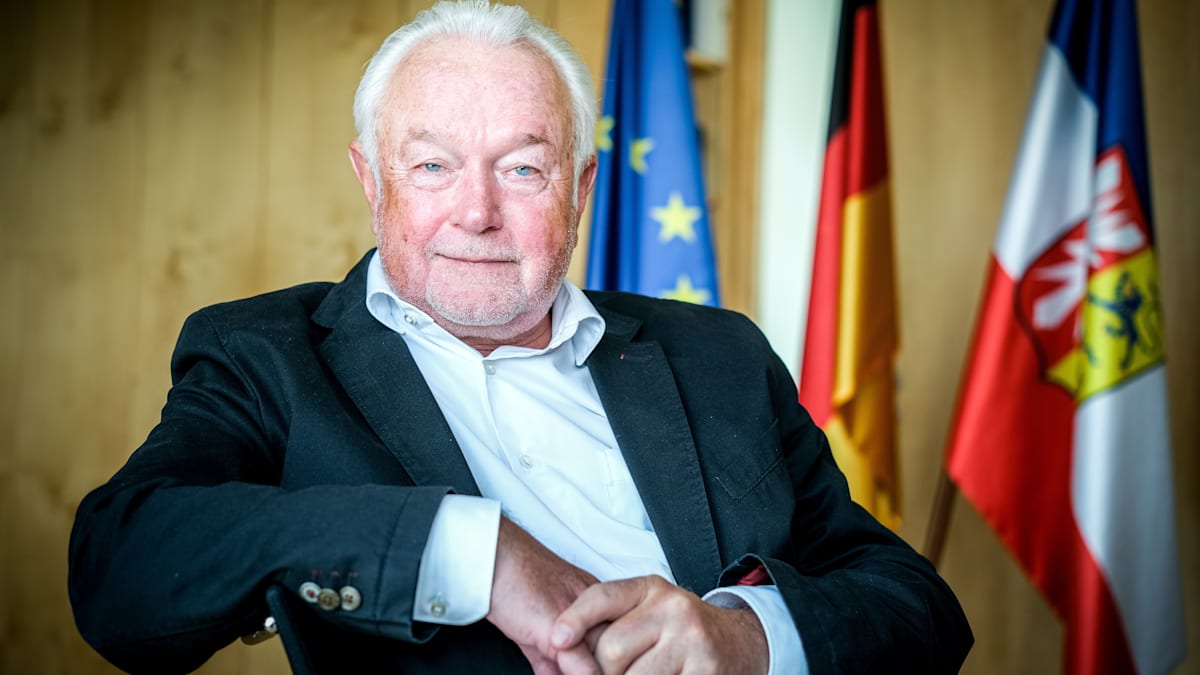
Wolfgang Kubicki's Bold Stance on Germany's Future
In the dynamic and often tumultuous landscape of German politics, few figures command attention quite like Wolfgang Kubicki. As the Vice-President of the German Bundestag and a prominent voice within the Free Democratic Party (FDP), Kubicki is known for his sharp wit, direct communication, and willingness to challenge the status quo. His recent reflections on Germany's current political trajectory, particularly concerning the ruling "Ampel" coalition and the impending Bundestag elections, offer a revealing glimpse into the FDP's strategic thinking and the deeper anxieties bubbling beneath the surface of the nation's leadership.
Kubicki's insights, shared in an exclusive interview with Cicero magazine's Clemens Traub, underscore a fundamental dissatisfaction within the FDP regarding the coalition's direction. He emphatically rejects the notion that his strategic considerations require external guidance, asserting his long-held view that the FDP has consistently and openly communicated its preconditions for continued coalition participation. Specifically, he highlights the critical need for a shared foundation on economic and migration policies. Without tangible progress and a recalibration in these areas, Kubicki states, the coalition's future remains untenable.
His candid admission, "I wanted out of this coalition, I no longer wanted to support a Chancellor who puffs out his cheeks but delivers nothing," speaks volumes about the depth of his frustration. This sentiment is largely directed at Chancellor Olaf Scholz, whose promises of economic "Wumms" (a German term implying a strong impact or surge) have, in Kubicki's assessment, amounted to nothing more than "faint breezes." Such pronouncements signal a profound ideological rift that could redefine Germany's political landscape leading into the next general election. For further insights into the FDP's demands, explore Wolfgang Kubicki: FDP Demands Change Amid Coalition Crisis.
A Call for Competence: Kubicki's Critique of Economic Policy
At the heart of Wolfgang Kubicki's critique lies a demand for practical competence over what he perceives as ideological posturing, particularly concerning economic governance. As an economist by profession, Kubicki pulls no punches when discussing the performance of the current Economy Minister. He describes it as "cruel" that someone has spent three years in a "taxpayer-funded internship" without grasping the fundamentals of how the economy truly functions. This harsh assessment underscores a central tenet of Kubicki's political philosophy: the need for "craftsmen" who can "tackle problems and bring about positive change," rather than "moralists" who merely dictate how others should conduct their affairs.
This perspective resonates deeply with a growing segment of the German electorate, including Wolfgang Kubicki Jung—a demographic increasingly disillusioned by political rhetoric and yearning for concrete, actionable solutions. Kubicki argues that the public isn't looking for sermons; they're looking for leaders capable of implementing effective policies that address pressing issues like inflation, energy costs, and industrial competitiveness. His point is clear: genuine economic growth and stability require a deep understanding of market mechanisms, not just aspirational targets. When he declares, "And if you need a culprit, take me," Kubicki isn't merely taking responsibility; he's issuing a challenge to an administration he believes is failing on core economic fronts, signaling his readiness to stand by his convictions and advocate for significant policy shifts. This powerful critique highlights the growing chasm between political promises and economic realities, a theme explored further in Kubicki Unleashes Sharp Critique on Scholz & Habeck's Policy.
The Shift from Moralizing to Mastering Challenges
Kubicki’s distinction between "moralists" and "craftsmen" offers a critical framework for understanding his vision for effective governance. A craftsman, in this context, is a leader who:
- Understands practical realities: Possesses a deep, evidence-based grasp of the issues at hand, particularly in complex fields like economics.
- Focuses on tangible outcomes: Prioritizes results and measurable improvements in people's lives and the nation's prosperity.
- Embraces problem-solving: Is willing to adapt, innovate, and make difficult decisions based on what works, rather than what aligns with a specific ideological stance.
- Communicates clearly and directly: Avoids ambiguous language or hollow promises, opting instead for transparency and honesty with the electorate.
Germany's Fading International Influence: A Diplomatic Crisis?
Beyond domestic economic concerns, Wolfgang Kubicki voices profound alarm over Germany's deteriorating international standing. His assertion that "Germany has never been as unpopular in Europe and in the world as it is currently" serves as a stark warning. Kubicki attributes this decline primarily to Germany's perceived tendency to "explain to all people how they should conduct politics," a moralistic approach that he believes alienates allies and undermines genuine cooperation.
Recalling past eras of strong German diplomacy, Kubicki reminisces about times under leaders like Hans-Dietrich Genscher, Helmut Kohl, and Gerhard Schröder, when Germany was "surrounded by stateswomen and statesmen with whom one enjoyed meeting." This historical comparison sharply contrasts with his current assessment of Chancellor Olaf Scholz, whom he claims "nobody currently likes to meet." Kubicki describes Scholz as a "Gernegroß" – a braggart or show-off – who makes grand announcements without delivering substantive results. The multiple promises of "Wumms" (double-Wumms, triple-Wumms) that have evaporated into "faint breezes" symbolize, for Kubicki, a leadership style that lacks credibility on the global stage.
This decline in international esteem carries significant implications for Germany's role in global affairs, trade relationships, and its ability to forge consensus on critical issues from climate change to security. A nation perceived as lecturing rather than collaborating risks isolating itself, making it harder to protect its own interests and contribute constructively to global challenges. Kubicki's concerns highlight the urgent need for Germany to re-evaluate its diplomatic approach and rebuild trust with its international partners through genuine engagement and tangible contributions.
Rebuilding Trust: A Path Forward
To reverse this trend, Kubicki implicitly calls for a shift towards a more collaborative and less prescriptive foreign policy. Practical steps for Germany could include:
- Active listening and empathy: Prioritizing understanding the perspectives and needs of other nations, rather than imposing German viewpoints.
- Focus on shared interests: Identifying common ground for cooperation on global challenges, emphasizing mutual benefits rather than moral imperatives.
- Consistent and reliable diplomacy: Ensuring that promises are kept and commitments are honored, thereby rebuilding trust and predictability.
- Economic partnership: Leveraging Germany's economic strength to foster genuine partnerships and mutual growth, avoiding perceptions of economic dominance or moral superiority.
Beyond the "Bubble Campaign": What Voters Truly Need
Wolfgang Kubicki's critique extends sharply to the nature of modern election campaigns, particularly that of Economics Minister Robert Habeck. He dismisses Habeck's approach as a "bubble campaign," designed primarily to "satisfy his own bubble" or echo chamber. Kubicki finds aspects of it "partly kitschy, ridiculous," and bordering on inappropriate for someone aspiring to be Chancellor of the Federal Republic of Germany.
He satirizes a campaign post he encountered, which lauded Habeck as a unifying figure: "Robert Habeck unites. He is the person, the candidate for Jung and Alt, for Schwarz and Braun, for Blond and back and forth. He doesn't divide, he unites. He is the one who can unite the country." Kubicki's sardonic conclusion, "Now only: Amen," underscores his deep skepticism about such feel-good, all-encompassing rhetoric. He argues that this moralistic attitude offers no real solutions, and people are not looking to elect a "pastor" but rather someone capable of tangible leadership.
For Kubicki, the electorate, including Wolfgang Kubicki Jung—a discerning segment of younger voters—is tired of superficiality. They crave leaders who demonstrate a clear understanding of practical governance, economic realities, and geopolitical complexities. The demand is for authenticity and competence, not just a charismatic appeal that fails to translate into effective policy. His criticism suggests a significant disconnect between what some politicians are offering and what a growing number of voters are genuinely seeking: practical, grounded leadership that can deliver real change rather than merely generating appealing narratives. This sentiment points towards a desire for a politics of substance, where actions speak louder than carefully crafted social media posts or broad, unifying statements.
Practical Leadership in an Age of Disillusionment
In an age where political trust is often eroded, Kubicki's call for "craftsmen" over "moralists" resonates with a broader desire for accountable and effective governance. Voters, especially those who feel neglected by current policies, are looking for leaders who:
- Address real-world problems: Tackle issues that directly impact their daily lives, such as economic stability, healthcare, and education.
- Show genuine expertise: Possess or are supported by teams with deep knowledge in critical policy areas.
- Are decisive and effective: Capable of making tough decisions and seeing them through to successful implementation.
- Inspire confidence, not just emotion: Build trust through consistent performance and clear communication, rather than relying on emotional appeals.
These qualities, according to Kubicki, are what Germany needs to navigate its current challenges and reclaim its standing both domestically and internationally.
Conclusion
Wolfgang Kubicki's recent remarks offer a potent and unvarnished assessment of Germany's political landscape, underscoring deep divisions within the ruling coalition and challenging the very foundations of current leadership. His call for a shift from moralistic posturing to pragmatic "craftsmanship" is a powerful message, resonating with a populace yearning for tangible results over empty promises. Whether dissecting the FDP's strategic independence, criticizing the economic competence within the government, lamenting Germany's fading international influence, or exposing the perceived superficiality of modern political campaigns, Kubicki remains a formidable voice demanding accountability and genuine leadership. As Germany approaches its next federal elections, the debates sparked by figures like Wolfgang Kubicki Jung—representing a desire for fresh, competent, and honest leadership—will undoubtedly shape the discourse and ultimately determine the nation's future direction.