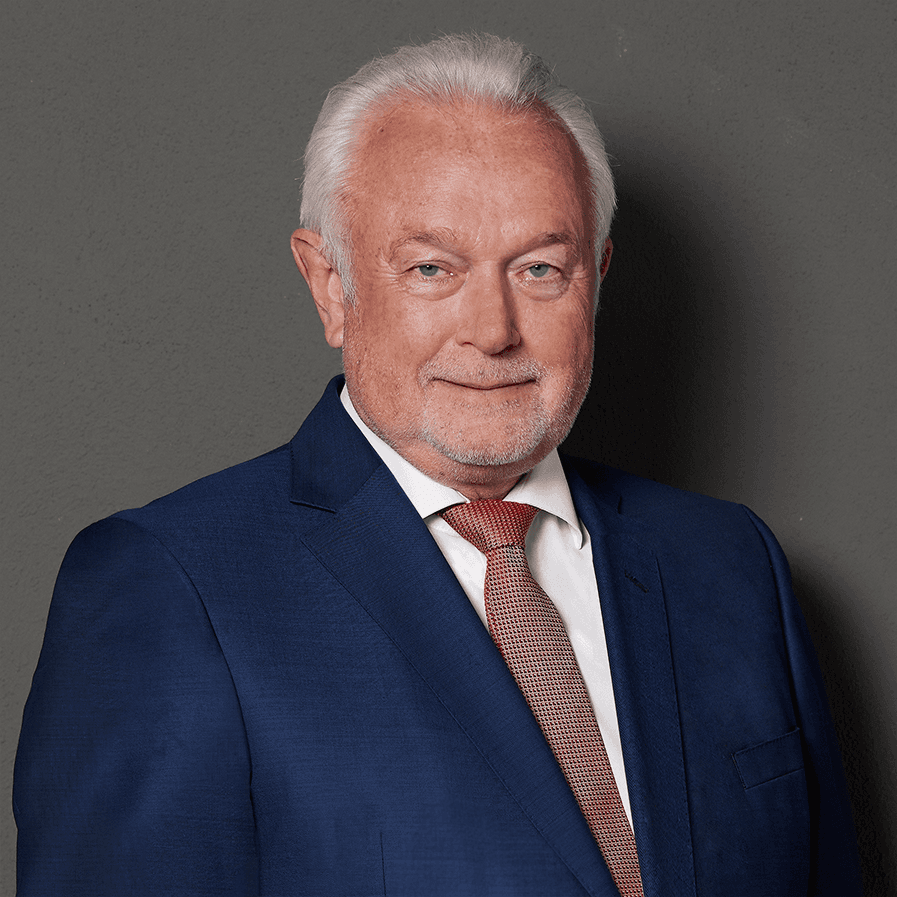
Wolfgang Kubicki: FDP Demands Change Amid Coalition Crisis
The German political landscape is currently defined by a palpable tension within its "Ampel" (traffic light) coalition, and at its epicentre stands Wolfgang Kubicki. The Vice-Chairman of the Free Democratic Party (FDP) and Vice-President of the German Bundestag, Kubicki has emerged as one of the most vocal and uncompromising critics of the current government's direction. His recent interview with Clemens Traub for the Cicero Podcast Politik has sent ripples through Berlin, signalling a potential breaking point for the three-party alliance if significant changes are not implemented. Kubicki's candid remarks underscore the FDP's growing frustration, particularly concerning economic and migration policies, painting a stark picture of a coalition on the brink.
Kubicki's position is clear: the FDP's continued participation in the coalition is contingent upon a fundamental shift in policy. He has openly communicated since mid-June that without a shared foundation for altering economic and migration strategies, the coalition's continuation is untenable. This isn't merely a political manoeuvre; it reflects a deep-seated conviction that the government, under Chancellor Olaf Scholz, has failed to deliver on its promises, particularly regarding economic revitalisation. From his earlier days as a rising political talent – the Wolfgang Kubicki Jung who first made his mark with sharp wit and liberal convictions – to his current role as a seasoned veteran, Kubicki has consistently advocated for pragmatic, solution-oriented governance, a stark contrast to what he perceives in the current administration.
A Veteran's Unflinching Assessment of the Ampel Coalition
Wolfgang Kubicki’s political career, spanning decades, has consistently been marked by a blend of intellectual rigour and a refreshingly direct communication style. This forthrightness, a characteristic that has defined him from his earlier political engagements as the dynamic Wolfgang Kubicki Jung to his present role as a key FDP figure, is now pointed squarely at the heart of the Ampel coalition. His recent statements are not mere political rhetoric but stem from a profound disillusionment with the government's perceived inaction and misdirection. Kubicki, an economist by training, argues that the current leadership has squandered opportunities and failed to grasp the fundamentals necessary for Germany's prosperity.
At the core of his critique is the FDP's unwavering demand for tangible changes in economic and migration policy. Kubicki explicitly stated his personal desire to exit the coalition, expressing an unwillingness to continue supporting a Chancellor whom he believes "puffs out his cheeks but brings nothing to the table." This sentiment is particularly sharp when recalling the numerous "Wumms" (boost/bang) promises made by Chancellor Scholz – from an economic "Wumms" to "Doppel-Wumms" and even "Dreifach-Wumms." According to Kubicki, these grand announcements have yielded "nothing but a faint breeze," leaving the German economy stagnant and the public's trust eroded.
Kubicki's frustration extends to what he views as a lack of tangible results despite considerable public resources. He believes that the FDP, committed to economic growth and fiscal responsibility, cannot ethically defend policies that are, in his expert opinion, fundamentally flawed. The stakes are incredibly high, not just for the FDP, but for the stability of German governance. His readiness to personally shoulder the blame – "If you need a culprit, take me" – underscores the gravity of his stance and his deep conviction regarding the necessity of a policy correction. The FDP’s position reflects a long-held belief in liberal economic principles, which Kubicki argues are being neglected at Germany's peril.
Scholz Under Fire: "Gernegroß" and International Isolation
Chancellor Olaf Scholz is the primary target of Kubicki's most cutting criticisms, described as a "Gernegroß" – a term implying someone who acts big or boastful but lacks substance. This characterisation goes beyond policy disagreements, touching upon Scholz's leadership style and perceived ineffectiveness on both domestic and international fronts. Kubicki laments the series of unfulfilled promises, particularly the repeated "Wumms" declarations that, in his view, have left the German economy craving real impetus.
Beyond domestic policy, Kubicki casts a grim shadow over Germany's current international standing. He contends that Germany has never been as unpopular in Europe and globally as it is now, attributing this to a perceived tendency by Berlin to dictate political conduct to other nations. "We have no friends anymore," he starkly asserts, drawing a sharp contrast with previous eras. He fondly recalls times under leaders like Hans-Dietrich Genscher, Helmut Kohl, and Gerhard Schröder, when Germany was "surrounded by stateswomen and statesmen with whom one enjoyed meeting." In stark contrast, Kubicki claims he currently knows "no one who enjoys meeting with Olaf Scholz." This portrayal suggests a diplomatic isolation that could undermine Germany's influence and effectiveness on the global stage. For a deeper dive into Kubicki's critique of Scholz and Habeck, read: Kubicki Unleashes Sharp Critique on Scholz & Habeck's Policy.
This decline in international esteem, as seen through Kubicki's eyes, is not just a matter of diplomatic niceties but has practical implications for Germany's role in addressing global challenges. A nation perceived as lecturing rather than collaborating risks alienating potential allies and diminishing its capacity for collective action. Kubicki's concern isn't just about the optics but about the tangible erosion of Germany's historical strengths in diplomacy and alliance-building.
The FDP's Economic Pushback: Habeck's "Tax-Funded Internship"
The FDP's economic frustrations are particularly acute regarding Minister for Economic Affairs and Climate Action, Robert Habeck. Wolfgang Kubicki, himself a trained economist, finds Habeck's performance deeply troubling. His assessment is brutally frank: he finds it "cruel" that someone has apparently completed a "tax-funded internship" for three years and "still doesn't know how the economy works." This blistering critique highlights the FDP's core contention that the current economic policy is being steered by an individual lacking fundamental competence, leading to stagnation rather than growth.
Kubicki's analysis suggests that Habeck's approach is more aligned with ideological pursuits rather than pragmatic economic solutions. He argues that the German populace is not seeking "moralists" or "pastors" but rather "Handwerker" – skilled craftsmen or doers – who can actively tackle problems and effect positive change. This distinction is crucial for the FDP, which champions a liberal economic agenda focused on innovation, deregulation, and fiscal prudence. The perception that economic policy is driven by a "bubble-wahlkampf" (bubble election campaign), catering to a specific ideological base rather than addressing broader national needs, is deeply concerning to Kubicki.
He dismisses Habeck's campaign style as "kitschig" (kitschy) and "lächerlich," particularly lampooning the narrative that Habeck "unites everyone" and is "the candidate for young and old, for black and brown, for blond and whatever." Kubicki views this as a superficial and moralistic approach, ill-suited for a candidate aspiring to lead a major European economy. The FDP believes that genuine leadership requires practical expertise and a focus on tangible results, echoing their call for a more pragmatic government. For more on Germany's international standing and Kubicki's election views, see: Germany's Stance: Kubicki on Unpopularity and Election Views.
Beyond the Bubble: Kubicki's Vision for Pragmatic Leadership
Wolfgang Kubicki’s outspokenness is not merely a complaint; it’s a clarion call for a fundamental shift towards pragmatic leadership in Germany. His vision is rooted in the belief that the nation's challenges demand practical solutions from "doers" who understand the intricacies of economics and policy, rather than "moralists" or ideologues. This stance reflects a deep-seated frustration within the FDP that the current government has become overly preoccupied with abstract moral posturing and internal bubble politics, neglecting the concrete needs of its citizens and economy.
The implications of the FDP potentially exiting the coalition are immense, threatening to destabilise Germany's political landscape and potentially triggering early elections. Kubicki's statements are therefore not just critical commentary but a strategic positioning of the FDP ahead of the upcoming Bundestag election campaign. By clearly articulating their grievances and drawing a firm line in the sand, the FDP aims to distinguish itself as the party committed to economic reality and international credibility.
For Kubicki, the future of Germany hinges on its ability to elect leaders who are "craftsmen" – individuals capable of rolling up their sleeves and tackling complex issues with expertise and resolve. He believes that the electorate is weary of grand promises and moralistic sermons, yearning instead for effective governance that delivers tangible improvements in daily life and restores Germany's standing on the global stage. This emphasis on practical, results-oriented politics forms the bedrock of the FDP's demands and will undoubtedly be a central theme in the forthcoming election cycle.
Conclusion
Wolfgang Kubicki's audacious challenge to the Ampel coalition represents a critical juncture for German politics. His unflinching critique of Chancellor Scholz's leadership and Economic Minister Habeck's competence, coupled with his stark assessment of Germany's diminished international standing, underscores the profound ideological and practical chasm within the government. The FDP, under Kubicki's vocal influence, is demanding a return to pragmatic, economically sound policies and a more humble, effective approach to foreign relations. The coming months will reveal whether this internal pressure will force the coalition to recalibrate its course or if Kubicki's willingness to "take the blame" will lead to a dramatic reshaping of Germany's political future. What is clear is that the FDP, spurred by figures like the seasoned yet ever-direct Wolfgang Kubicki, is ready to enforce change, whatever the cost.